
How To Write Test Scenarios and Test Cases: Complete Guide for Effective Software Testing
Effective software testing depends on well-structured scenarios and detailed test cases that align with requirements and user stories. By mastering test scenario writing and test case development, teams ensure comprehensive coverage, reproducible results, and traceability from user needs to verification steps. This guide maps out definitions, relationships, step-by-step creation processes, best practices, templates, tool recommendations, integration in Agile/DevOps, automation insights, and practical examples—empowering developers, QA engineers, and project stakeholders to elevate testing quality and reliability.
In this guide you will learn:
- Foundational definitions and distinctions between test scenarios and test cases
- A systematic approach to crafting clear, comprehensive test scenarios
- Detailed format and process for writing reusable, traceable test cases
- Principles and pitfalls in test design and traceability management
- Role of scenarios and cases within modern SDLC, including Agile and DevOps
- Recommended templates, management tools, and automation enhancements
What Are Test Scenarios and Test Cases? Definitions and Key Differences
A test scenario describes a high-level condition or functionality to validate, while a test case breaks that scenario into detailed steps with inputs, actions, and expected outcomes. Scenarios ensure broad coverage of user stories and requirements, and cases guarantee repeatable verification. For example, a “User Authentication” scenario covers login, logout, and password recovery flows; corresponding test cases specify credentials, navigation steps, and expected page responses.
What Is a Test Scenario? Purpose, Types, and Examples
A test scenario outlines a functional area or user journey to verify critical software behavior. Its purpose is to guide test planning by capturing essential conditions under which the system must perform. Types include functional, integration, regression, and exploratory scenarios. For instance, a functional scenario “Process Online Payment” checks end-to-end checkout, whereas a regression scenario “Verify Checkout After Update” ensures no new defects emerge. Scenarios act as anchors for deriving detailed test cases and guarantee coverage of all user stories.
GeneratingUse CaseScenarios fromUserStories forSoftwareDesign… , and (c) analyse how user stories impact design decisions during sprint planning … user stories into visual use case scenarios in the form of robustness diagrams (a semi-formal scenario…Generating use case scenarios from user stories, F Gilson, 2020
What Is a Test Case? Components, Importance, and Examples
A test case is a structured document detailing preconditions, test steps, test data, and expected results to validate a specific functionality.
Key components include:
- Identifier: unique code (e.g., TC-LOGIN-001)
- Preconditions: system state required before execution
- Steps: ordered actions to perform
- Test Data: exact input values
- Expected Result: criteria for pass/fail
- Priority: criticality level
Example:
Identifier: TC-LOGIN-001
Precondition: User account exists
Steps:
- Open login page
- Enter valid credentials
- Click submit
Expected Result: Dashboard loads with welcome message
How Do Test Scenarios and Test Cases Relate? Key Differences and Interdependencies
Test scenarios and test cases form a hierarchy where a scenario contains multiple test cases. Scenarios define the “what” and “why,” while test cases specify the “how” and “when.” This relationship ensures traceability: each requirement mapped to a scenario leads to one or more cases that verify specific conditions. Unlike cases that require precise data, scenarios focus on broader flows, enabling testers to derive cases systematically and ensuring no functionality is overlooked.
| Scenario Aspect | Test Scenario | Test Case |
|---|---|---|
| Granularity | High-level functional flows | Detailed step-by-step instructions |
| Function | Guides coverage | Executes specific validation |
| Traceability Link | Derived from user stories | Linked to test scenarios |
| Examples | “Validate Checkout” | “TC-CHCK-002: Apply discount code” |
| Outcome Focus | Comprehensive coverage | Precise pass/fail criteria |
How Do You Write Effective Test Scenarios? Step-by-Step Process and Best Practices

Creating robust test scenarios begins with understanding requirements and user stories, then structuring scenarios to cover all critical flows. This process fosters clarity, prioritization, and early defect detection.
What Are the Essential Steps to Create Test Scenarios?
- Analyze requirements and user stories to identify functionalities.
- List high-level operations and business rules for each feature.
- Group related operations into scenario clusters (e.g., authentication, payment).
- Assign priority based on risk, complexity, and business impact.
- Review with stakeholders for completeness and traceability.
Which Best Practices Ensure Clear and Comprehensive Test Scenarios?
- Use descriptive titles that reflect user intent (“Validate Password Reset Flow”).
- Maintain independence by focusing on single functionality per scenario.
- Ensure coverage of positive, negative, and edge-case conditions.
- Keep scenarios concise—one to two sentences capturing the essence.
- Trace scenarios back to requirements with unique identifiers.
How to Derive Test Scenarios from User Stories and Requirements?
Derivation relies on mapping user story acceptance criteria to scenario conditions. For each user story, extract actions, boundary conditions, and variations, then formalize them into scenarios.
| User Story | Scenario | Coverage |
|---|---|---|
| As a customer, I can check out | Validate checkout with valid cart items | End-to-end purchase flow |
| As a customer, I can apply coupon | Validate discount application during checkout | Promotion and pricing business rule |
| As a user, I can recover password | Validate password reset via email link | Security and notification flow |
How To Write Test Cases: Detailed Guide with Format and Examples
Writing test cases transforms scenarios into executable scripts. A consistent format and clear examples make test suites maintainable and automatable.
What Are the Key Components of a Test Case?
Every test case should include:
- Test Case ID: Unique identifier (meronym of case management)
- Title: Brief description of purpose
- Preconditions: Required system state or data
- Test Steps: Ordered actions to perform
- Test Data: Specific inputs used in steps
- Expected Results: Criteria for pass/fail
- Postconditions: System state after execution
- Priority: High/Medium/Low based on business value
What Is the Step-by-Step Process for Writing Test Cases?
- Reference the linked test scenario identifier.
- Define preconditions to set up the environment.
- Write concise, numbered steps describing user actions.
- Specify exact test data values for reproducibility.
- State expected results clearly and objectively.
- Review and peer-validate for clarity and completeness.
What Are Best Practices for Writing Clear and Reusable Test Cases?
- Use consistent terminology aligned with requirements.
- Keep steps atomic—avoid combining multiple actions in one step.
- Parameterize test data to support data-driven testing.
- Include cleanup steps or postconditions to reset environment.
- Assign traceability links to requirements and scenarios.
Can You See Sample Test Case Templates and Examples?
Below is an example template for a UI functional test case:
| Field | Description |
|---|---|
| TC ID | TC-UI-SEARCH-001 |
| Title | Verify search functionality with valid keyword |
| Preconditions | User is on the homepage |
| Steps | 1. Enter “laptop” in search box. 2. Click search icon. |
| Test Data | Keyword: laptop |
| Expected Result | Search results display items related to “laptop” |
| Postconditions | None |
| Priority | Medium |
This template can be adapted for API, security, and performance test cases by modifying fields such as request payload and response assertions.
What Are the Best Practices for Writing Test Cases and Scenarios?
Elevating test design quality requires adherence to clarity, coverage, and traceability principles, while avoiding common pitfalls.
How to Ensure Test Case Clarity and Coverage?
- Define clear pass/fail criteria in expected results.
- Cover positive, negative, boundary, and integration conditions.
- Use equivalence partitioning and boundary value analysis to reduce redundancy.
- Peer-review cases to catch ambiguities and gaps.
Effective coverage mapping prevents missed defects and over-testing of low-risk areas, boosting efficiency.
How to Maintain Traceability Between Requirements, Scenarios, and Test Cases?
Implement a traceability matrix linking requirement IDs to scenario IDs and to test case IDs. This enables impact analysis when requirements change and ensures auditability.
| Requirement ID | Scenario ID | Test Case IDs |
|---|---|---|
| REQ-USER-001 | SCN-AUTH-LOGIN | TC-LOGIN-001, TC-LOGIN-002 |
| REQ-ORDER-010 | SCN-CHECKOUT-VALID | TC-CHECKOUT-003, TC-CHECKOUT-004 |
What Are Common Pitfalls to Avoid in Test Design?
- Overly complex test scenarios that hinder focus.
- Ambiguous steps lacking precise data.
- Ignoring negative or edge-case conditions.
- Duplicate test cases due to poor reuse.
- Lack of review leading to misalignment with requirements.
Avoiding these pitfalls preserves test suite integrity and reduces maintenance overhead over time.
How Do Test Scenarios and Test Cases Fit into Software Development Life Cycle (SDLC)?
Test artifacts integrate at each SDLC phase—from planning through maintenance—ensuring quality throughout.
What Is the Role of Test Scenarios and Test Cases in Agile and DevOps?
In Agile sprints, scenarios derived from user stories inform acceptance criteria, and test cases guide sprint testing. In DevOps pipelines, automated test cases trigger continuous integration checks, catching defects early and supporting rapid feedback loops.
Test CaseAutomation: OvercomingManual TestingLimitations in Agile/DevOpsTest case automation significantly mitigates the shortcomings of manual testing, particularly in fast-paced development cycles. The findiTest case automation: transforming software testing in the digital era, G Agarwal, 2024
How Are Test Cases Managed and Executed During SDLC?
Test management tools track case creation, execution status, and defects. Teams schedule manual case runs during system or regression testing, while CI/CD pipelines execute automated suites on build servers. This blended approach improves test coverage and accelerates release cycles by leveraging cloud-based infrastructure and parallel execution.
How Does Automation and AI Enhance Test Case Writing and Execution?
Automation frameworks convert reusable test cases into scripts that run against application interfaces. AI-augmented tools can generate initial test cases from user stories, analyze failure patterns, and suggest data variations. Leveraging cloud-based AI/ML services to predict flaky tests and optimize case selection streamlines maintenance and boosts reliability.
AI’s Role inTest CaseDesignandDataGeneration for Agile/DevOpsQAWe begin by examining the evolution of test case design, … for automated test case generation. Subsequently, we delve into the significance of …From Test Case Design to Test Data Generation: How AI Is Transforming End-to-End Quality Assurance in Agile and DevOps Environments, Unknown Author, 2025
What Are Useful Test Case Templates and Tools? Downloadable Examples and Management Software
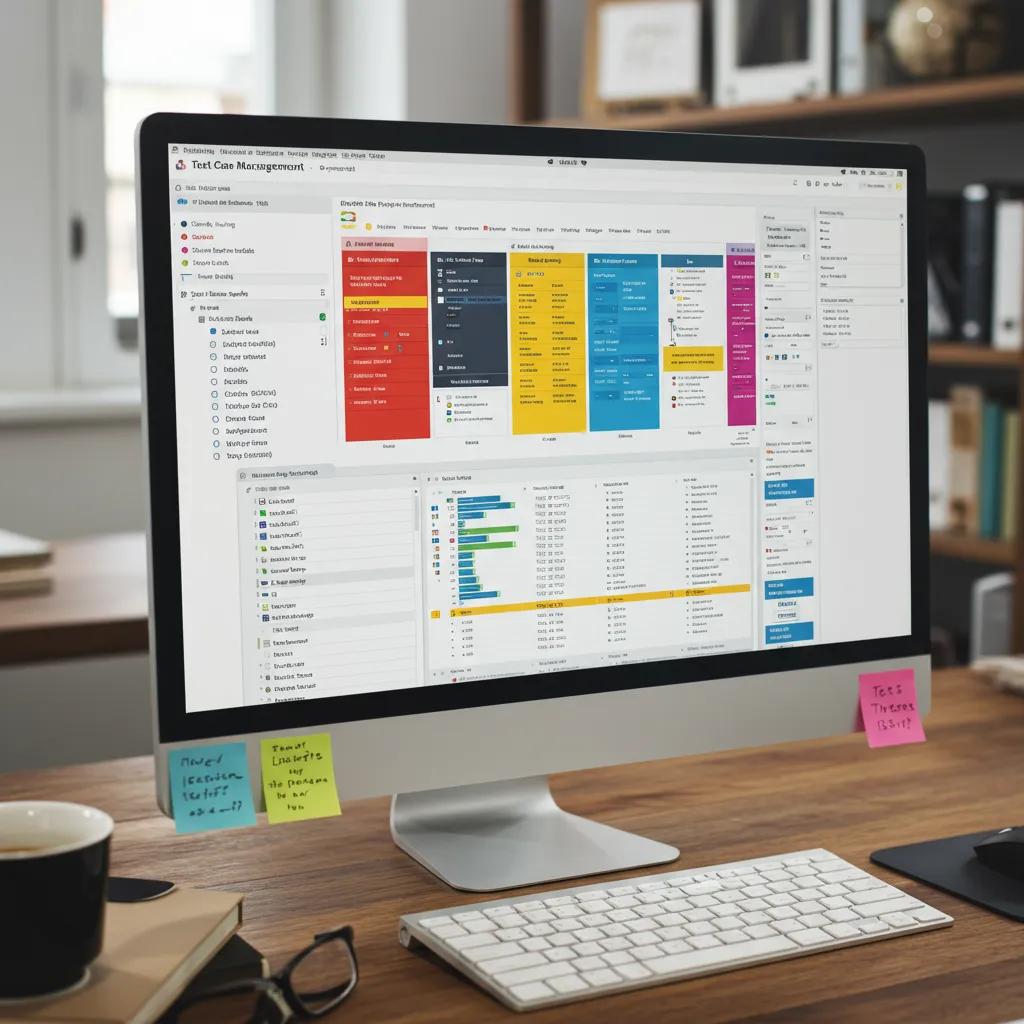
Practical templates and robust tools accelerate test development and execution.
Where Can You Find Downloadable Test Case and Scenario Templates?
Prebuilt templates are often available in test management platforms or cloud-based repositories. Organizations can publish internal libraries of scenario and case spreadsheets or documents that standardize fields across teams.
What Features Should Test Management Tools Have for Effective Test Case Handling?
- Customizable templates and workflows
- Requirement–scenario-case traceability support
- Version control and history tracking
- Integration with issue-tracking and CI/CD systems
- Analytics dashboards for coverage and execution metrics
A tool offering these capabilities promotes collaboration and transparency across distributed teams.
How to Use Templates to Improve Test Case Consistency and Efficiency?
Introduce standardized fields, naming conventions, and priority schemes in templates. Enforce review gates to validate templates before case creation. Automated imports of user story IDs and requirement descriptions reduce manual entry and errors, ensuring consistency and accelerating authoring.
Frequently Asked Questions
What Are the Benefits of Writing Test Scenarios and Test Cases?
Writing test scenarios and test cases provides numerous benefits, including improved test coverage, enhanced traceability, and better communication among team members. They help ensure that all functional requirements are validated, reducing the risk of defects in production. Additionally, well-documented test cases facilitate easier maintenance and updates, as they provide a clear reference for future testing efforts. This structured approach also aids in onboarding new team members, as they can quickly understand the testing process and requirements through these documents.
How Can Automation Improve the Testing Process?
Automation significantly enhances the testing process by increasing efficiency and consistency. Automated test cases can be executed quickly and repeatedly, allowing for faster feedback during development cycles. This is particularly beneficial in Agile and DevOps environments, where rapid iterations are common. Automation also reduces the likelihood of human error, ensuring that tests are executed in the same manner each time. Furthermore, it frees up testers to focus on more complex testing scenarios that require human judgment, ultimately improving overall software quality.
What Tools Are Recommended for Managing Test Cases?
Several tools are highly recommended for managing test cases, including TestRail, JIRA, and Zephyr. These tools offer features such as customizable templates, traceability support, and integration with CI/CD pipelines. They also provide analytics dashboards to track test coverage and execution metrics, which can help teams identify areas for improvement. Additionally, cloud-based solutions allow for collaboration among distributed teams, ensuring that everyone has access to the latest test case information and can contribute effectively to the testing process.
How Do You Ensure Test Cases Are Reusable?
To ensure test cases are reusable, it is essential to write them in a modular and parameterized manner. This means breaking down test cases into smaller, independent components that can be combined in various ways. Using consistent naming conventions and clear documentation also aids in reusability. Additionally, incorporating data-driven testing techniques allows the same test case to be executed with different inputs, further enhancing its versatility. Regularly reviewing and updating test cases based on feedback and changes in requirements also contributes to their long-term usability.
What Is the Importance of Peer Review in Test Case Development?
Peer review in test case development is crucial for ensuring quality and accuracy. It allows team members to provide feedback on the clarity, completeness, and effectiveness of test cases. This collaborative process helps identify ambiguities, gaps, or potential issues that the original author may have overlooked. Peer reviews also promote knowledge sharing among team members, enhancing overall team competency. By incorporating diverse perspectives, the team can create more robust and effective test cases that better align with project requirements and user expectations.
How Can You Measure the Effectiveness of Test Scenarios and Cases?
The effectiveness of test scenarios and cases can be measured through various metrics, such as test coverage, defect density, and pass/fail rates. Test coverage indicates how much of the application’s functionality is being tested, while defect density measures the number of defects found relative to the size of the application. Additionally, analyzing the pass/fail rates of test cases can provide insights into their effectiveness. Regularly reviewing these metrics helps teams identify areas for improvement and ensures that testing efforts align with project goals and quality standards.
What Is the Difference Between a Test Case and a Test Scenario?
A test scenario defines the overall feature or flow to test (e.g., “Validate shopping cart”), while a test case specifies exact steps, data inputs, and expected results to verify part of that scenario. Scenarios cover “what” and “why,” whereas cases cover “how” and “when,” ensuring detailed verification aligned to high-level objectives.
How Do You Write a Good Test Case?
- Use precise, atomic steps that any tester can follow.
- Include specific test data values and preconditions.
- Define unambiguous expected results.
- Link to requirements and scenarios for traceability.
- Peer-review to eliminate ambiguities.
What Are the Components of a Test Case?
- Unique identifier
- Title and description
- Preconditions
- Detailed test steps
- Test data
- Expected results
- Postconditions
- Priority
How Do You Create Effective Test Scenarios?
- Extract key actions and conditions from user stories.
- Group related flows under descriptive scenario names.
- Assign risk-based priorities.
- Review for coverage of positive, negative, and edge cases.
- Maintain mapping to requirements for complete traceability.
Testing excellence relies on clear scenario definitions and meticulous test case development that map requirements to actionable steps. By following structured processes, best practices, and leveraging modern tools— including AI-driven test generation and cloud-based execution—teams achieve comprehensive coverage, rapid feedback, and high software quality. Implement these guidelines to streamline test design, strengthen traceability, and reduce maintenance overhead, ensuring every release delivers reliable, user-centric applications.
Conclusion
Mastering the art of writing test scenarios and test cases is essential for ensuring software quality and reliability. By implementing structured processes and best practices, teams can achieve comprehensive coverage and traceability, ultimately enhancing the testing process. To further elevate your testing efforts, explore our recommended templates and tools that streamline test case management. Start optimizing your software testing today and unlock the full potential of your development lifecycle.