The Low-Tech Revenge: Why Simple Solutions Are Making a Comeback
The Low-Tech Revenge is unfolding as simple, resource-efficient approaches reclaim prominence in a world grappling with e-waste growth and diminishing resources. As globalization and planned obsolescence push complexity to its limits, communities rediscover robust tools that embody the low tech movement ethos of sustainability, durability, and accessibility. This article explores what low-tech means, how it contrasts with high-tech, the forces driving its resurgence, practical DIY applications, and why clear communication is essential for advocacy. We’ll also examine environmental and economic benefits, showcase analog alternatives, and highlight right to repair success, all while demonstrating how tools like Grammarly can help you articulate these concepts clearly and confidently.
What Is Low-Tech? Definition, Characteristics, and Core Principles
Low-tech describes technologies designed with minimal complexity, relying on readily available materials to minimize environmental impact and maximize longevity. This concept reduces dependency on scarce resources and extends product lifespans, supporting local resilience and community empowerment.
Before diving deeper, let’s summarize the core principles of low-tech:
| Principle | Description | Impact |
|---|---|---|
| Simplicity | Designs use few parts and straightforward mechanisms | Easier to build, maintain, and repair |
| Accessibility | Materials and skills are widely available to diverse communities | Inclusive adoption across income levels |
| Sustainability | Resource use is minimized, and waste is reduced | Lower carbon footprint and e-waste |
These attributes set the stage for a closer look at how low-tech is defined today and why it matters.
Low-tech approaches for sustainability: key principles from the literature and practice
Research highlights that the low-tech movement extends beyond merely creating robust and less-consumptive technical artifacts. While resource efficiency and material reuse are crucial, technical appropriation is identified as the most frequently cited key principle, differentiating low-tech from other sustainability concepts like frugal innovations and circular economy.
This research provides a foundational understanding of low-tech principles and their contribution to sustainability, directly supporting the article’s definition and core tenets of the low-tech movement.
How Do We Define Low-Tech in Today’s Context?
Low-tech in contemporary settings refers to technologies that strike a balance between functionality and simplicity by leveraging human ingenuity over intricate electronics. Organizations prioritize local materials, manual operation, and open-source designs, ensuring communities can sustain essential services without high energy consumption or costly infrastructure.
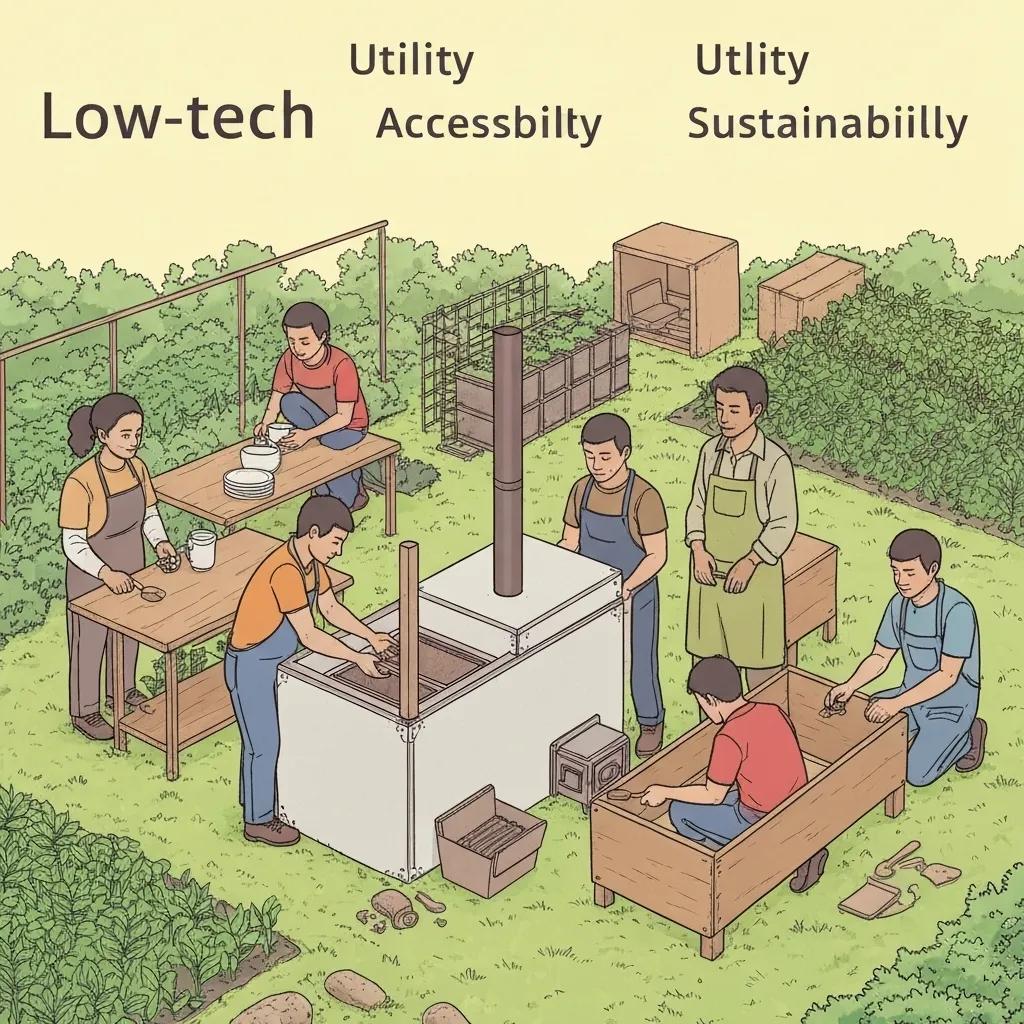
What Are the Key Principles of Low-Tech? Utility, Accessibility, Sustainability
Three pillars underpin the low-tech philosophy:
- Utility: Systems are tailored to meet basic needs efficiently without superfluous features.
- Accessibility: Solutions rely on common tools and local knowledge, promoting inclusive participation.
- Sustainability: Materials are renewable or recyclable, and designs emphasize minimal waste.
These principles guide practitioners to create devices that serve core functions while respecting ecological limits, paving the way for resilient communities.
How Has Low-Tech Evolved Over Time? Historical Context and Development
Low-tech roots trace back to pre-industrial eras when craftsmanship and manual tools defined everyday life. The Industrial Revolution introduced mass production and mechanization, but concerns about resource depletion and social equity spurred renewed interest in appropriate technologies during the 20th century. Today’s revival blends traditional methods with contemporary insights, focusing on circular economy models and degrowth philosophies.
What Are Common Examples of Low-Tech Solutions?
Low-tech solutions span diverse domains by prioritizing durability and local adaptation. Common instances include:
- Zeer pots for passive refrigeration using evaporative cooling.
- Bicycle ambulances delivering medical aid in remote areas.
- Solar cookers that concentrate sunlight to cook food without fuel.
- Mud-brick construction for natural insulation and low embodied energy.
These examples illustrate how simple principles yield reliable, affordable tools that thrive where high-tech often falters.
How Does Low-Tech Compare to High-Tech? Key Differences and Environmental Impact
Low-tech contrasts sharply with high-tech in complexity, resource use, and lifecycles. While high-tech often offers advanced functionality through electronics and digital connectivity, low-tech achieves core tasks with manual or passive methods, significantly reducing energy demands and e-waste generation.
| Feature | Low-Tech | High-Tech |
|---|---|---|
| Complexity | Few moving parts, manual control | Integrated circuits, software layers |
| Material Intensity | Local, renewable, recyclable | Rare earth minerals, complex alloys |
| Lifecycle & Repairability | Long lifespan, straightforward repair | Shorter lifespan, specialized servicing |
| Energy Demand | Passive or human-powered | High electricity and often disposable |
What Are the Main Differences Between Low-Tech and High-Tech?
Low-tech emphasizes robustness and ease of maintenance, whereas high-tech prioritizes performance, automation, and connectivity. Low-tech designs often forgo proprietary components, enabling users to fabricate or repair devices with basic workshops. High-tech products typically require specialized parts and expert servicing, driving higher long-term costs and waste.
How Does Low-Tech Offer Environmental Benefits Over High-Tech?
By minimizing energy inputs and avoiding electronic components, low-tech solutions reduce greenhouse gas emissions and eliminate toxic e-waste streams. Limited reliance on mining for rare elements supports conservation of finite resources and fosters local circular economies through repairability and material reuse.
What Are Analog Alternatives in a Digital World?
Analog tools replace digital devices to lower complexity and energy use. Examples include:
- Paper planners instead of calendar apps.
- Hand-crank radios for off-grid information access.
- Mechanical wristwatches in place of smartwatches.
Analog alternatives empower users to maintain productivity, often at negligible environmental cost.
How Does Planned Obsolescence Affect High-Tech Products?
Planned obsolescence accelerates device turnover by limiting product support and designing components for premature failure. This practice increases consumer expenses, enlarges e-waste volumes, and strains manufacturing supply chains that rely on finite resources.
The Impact of Planned Obsolescence on E-Waste Generation
Planned obsolescence is a deliberate strategy by manufacturers to design products with a limited lifespan, encouraging frequent upgrades and creating an accelerated purchase-and-replace cycle. This practice significantly contributes to the rapidly growing volume of electronic waste, posing serious environmental risks through toxic materials and increased greenhouse gas emissions.
This citation directly supports the article’s discussion on how planned obsolescence drives e-waste growth and its detrimental environmental consequences, contrasting with the low-tech ethos of durability.
What Drives the Comeback of Low-Tech? Movements, Challenges, and Societal Impact
A convergence of environmental urgency and social movements fuels the resurgence of low-tech. Communities and advocates challenge linear consumption models, turning to resilient systems that prioritize longevity over innovation for its own sake.
How Does the Low-Tech Movement Promote Sustainability and Resilience?
The low-tech movement champions resource stewardship by encouraging open-source designs, local manufacturing, and peer-to-peer knowledge sharing. It strengthens community bonds and fosters self-reliance, enabling societies to adapt to disruptions like climate events or supply-chain breakdowns.
Who Is Corentin de Chatelperron and What Is the Low-Tech Lab?
Corentin de Chatelperron is an engineer and explorer who founded the Low-Tech Lab to research, prototype, and disseminate energy-efficient devices powered by passive physics. His projects—ranging from solar ovens to water filtration systems—demonstrate how scientific principles can be harnessed without complex electronics.
How Are Degrowth and Simple Living Connected to Low-Tech?
Degrowth advocates for downscaling production and consumption to prioritize well-being and ecological stability. Simple living aligns with these goals by reducing material needs. Together, they underpin low-tech by emphasizing sufficiency, conviviality, and equitable resource distribution.
What Role Does the Right to Repair Movement Play in Supporting Low-Tech?
The right to repair empowers consumers and independent technicians to fix and upgrade products, directly countering planned obsolescence. Legislative successes in this area bolster low-tech adoption by ensuring spare parts, repair manuals, and software access remain available to the public.
Analysis of the emerging trends and challenges of the right to repair movement
A study on the right to repair movement reveals a growing trend in adopting repairability policies and increased consumer awareness regarding the environmental impact of consumption choices. However, significant challenges persist, including regulatory barriers, manufacturer resistance, and a lack of technical skills for effective repairs.
This research validates the article’s points about the right to repair movement’s role in promoting sustainability and countering planned obsolescence, while also acknowledging the ongoing challenges.
What Are Practical Low-Tech Solutions for Sustainable Living? Examples and DIY Guides
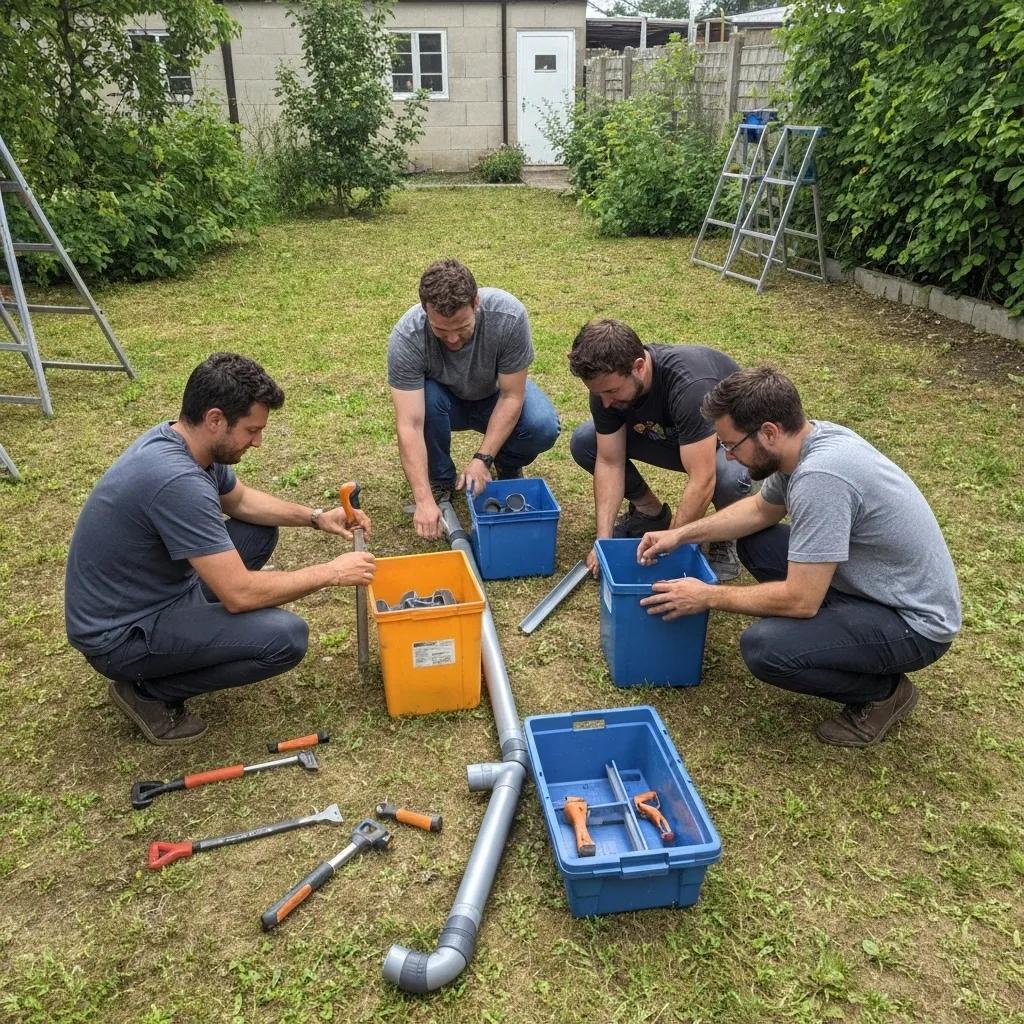
Low-tech applications span vital sectors, offering actionable methods to enhance self-sufficiency and reduce ecological footprints. Hands-on projects illustrate how simple techniques yield significant benefits in daily life.
Which Low-Tech Innovations Improve Home, Energy, and Food Sustainability?
In the home and food sectors, low-tech solutions maximize comfort with minimal inputs:
- Rocket stoves channel combustion efficiently to use less fuel.
- Rainwater harvesting barrels collect and filter water for irrigation.
- Compost toilets recycle nutrients while conserving water.
These measures lower utility bills, cut waste, and build local resilience.
How Can You Implement Low-Tech Water and Transportation Solutions?
Rely on gravity and human power for essential services:
- Gravity-fed drip irrigation delivers water without pumps.
- Hippo rollers allow easy transport of heavy loads on rough terrain.
- Hand-driven water pumps extract well water without electricity.
Each adaptation strengthens community autonomy and reduces operational costs.
What Are Frugal Innovations and Appropriate Technologies?
Frugal innovations focus on affordability and reliability, often emerging in resource-constrained settings. Appropriate technologies are designed for local climates, cultures, and skills, ensuring sustainable adoption. Both concepts prioritize social impact over profit maximization.
How Can You Start a DIY Low-Tech Project? Step-by-Step Communication Tips
Effective documentation is critical for project replication. Follow these steps:
- Define the objective in simple terms, outlining key requirements.
- List materials and tools using common names and local sourcing options.
- Illustrate each build phase with clear photos or sketches.
- Annotate procedures with concise explanations of underlying principles.
This structure ensures others can replicate and adapt your design, fostering community innovation.
How Can Clear Communication Help Advocate for Low-Tech Solutions? Grammarly’s Role in Simplifying Complex Ideas
Clear, concise writing bridges experts and beginners, making complex low-tech principles accessible. Grammarly’s AI-powered assistant promotes clarity and directness, enabling advocates to craft compelling narratives that resonate with diverse audiences.
Why Is Clarity and Conciseness Important When Writing About Low-Tech?
Strong communication reduces misunderstandings and highlights the practical value of low-tech projects. Precise language helps stakeholders—from policymakers to local volunteers—grasp technical details and benefits without getting bogged down by jargon.
How Can You Craft Persuasive Arguments for Low-Tech Advocacy?
To influence decision-makers, structure your argument around these elements:
- Evidence of success: Present case studies and impact data.
- Cost-benefit comparison: Quantify savings in resources and maintenance.
- Community testimonials: Share firsthand experiences of durability and resilience.
This combination builds trust and underscores the real-world effectiveness of simple solutions.
What Are Best Practices for Documenting Low-Tech Projects Effectively?
Use a consistent format that includes:
- Project overview summarizing purpose and scale.
- Materials list stating quantities and alternatives.
- Step-by-step guide with visual aids for each operation.
- Maintenance schedule outlining routine checks and repairs.
A well-organized document accelerates knowledge transfer and supports collective problem-solving.
How Does Grammarly Support Accessibility for Diverse Audiences Discussing Low-Tech?
Grammarly’s suggestions for tone, vocabulary, and sentence structure ensure content remains inclusive. Non-native speakers benefit from real-time feedback on grammar and readability, widening participation in low-tech conversations and making advocacy materials universally understandable.
What Are the Environmental and Economic Benefits of Low-Tech? Addressing Resource Depletion and E-Waste
Low-tech combats resource depletion by extending product lifespans and minimizing material inputs, directly reducing carbon emissions and e-waste. These benefits translate into cost savings and healthier ecosystems.
How Does Low-Tech Combat Resource Depletion and Climate Change?
By substituting energy-intensive machinery with manual or passive systems, low-tech projects cut greenhouse gas emissions and lower demand for finite materials like lithium and cobalt. Communities see increased self-reliance while global supply chains experience less strain.
What Is the Relationship Between Planned Obsolescence and E-Waste?
Planned obsolescence intentionally curtails product longevity, causing frequent replacements and vast quantities of discarded electronics. Low-tech rejects this model by designing for durability and repairability, drastically reducing the volume of hazardous waste entering landfills.
How Does Low-Tech Promote Product Longevity and Repairability?
Simple designs with modular parts enable users to replace or upgrade components easily. Detailed build instructions and open licenses encourage local workshops to produce spare parts, fostering a repair economy that extends product life cycles and preserves resources.
What Are Success Stories of Low-Tech Adoption in Developing Regions?
Several case studies illustrate impactful results:
- Zeer pot adoption in arid regions doubled shelf life for fresh produce.
- Bicycle ambulances in rural communities improved emergency healthcare access.
- Gravity-fed water filters provided safe drinking water to thousands without electricity.
These stories demonstrate that low-tech saves lives, cuts costs, and builds resilience where infrastructure is limited.
What Are Common Questions About Low-Tech?
Communities often seek clarity around core concepts, benefits, and movement dynamics. Key points include:
- Defining low-tech as sustainable tools designed for simplicity, durability, and resource efficiency.
- Contrasting low-tech with high-tech by highlighting material intensity, repair complexity, and e-waste generation.
- Noting examples like solar cookers, Zeer pots, and hand-driven pumps as practical implementations.
- Understanding the low-tech movement’s role in degrowth, simple living, and the right to repair success.
- Recognizing planned obsolescence as a driver for e-waste and how low-tech solutions counteract its effects.
These insights equip advocates to navigate misconceptions and accelerate adoption of simple solutions.
Low-tech’s resurgence underscores a global shift toward mindful consumption, durability, and community empowerment. By embracing accessible designs and promoting repairable, resource-efficient tools, societies can reduce environmental impact and foster resilience. Clear communication plays a pivotal role in this transition, with Grammarly helping advocates distill complex ideas into concise, persuasive messages. As simple solutions reclaim center stage, professionals and enthusiasts alike can harness low-tech to build a more sustainable future—one robust device at a time.
Frequently Asked Questions
What are the main challenges faced by the low-tech movement?
The low-tech movement encounters several challenges, including resistance from industries reliant on high-tech solutions and the prevailing consumer culture that favors convenience and novelty. Additionally, there is often a lack of awareness about the benefits of low-tech alternatives, which can hinder widespread adoption. Educational initiatives and community engagement are essential to overcoming these barriers, as they help to inform the public about the advantages of low-tech solutions and encourage a shift towards more sustainable practices.
How can individuals get involved in the low-tech movement?
Individuals can engage with the low-tech movement by participating in local workshops, DIY projects, and community initiatives focused on sustainability. Joining or forming groups that advocate for low-tech solutions can amplify efforts to promote awareness and education. Additionally, sharing knowledge through social media or blogs about low-tech practices and innovations can inspire others to adopt similar approaches, fostering a collective effort towards sustainability and resource efficiency.
What role does education play in promoting low-tech solutions?
Education is crucial in promoting low-tech solutions as it raises awareness about the environmental and economic benefits of simplicity and durability. By integrating low-tech principles into school curricula and community programs, individuals can learn about sustainable practices from an early age. Workshops and hands-on training can empower people with the skills needed to implement low-tech solutions in their lives, ultimately fostering a culture of sustainability and resilience within communities.
How can low-tech solutions be integrated into urban environments?
Integrating low-tech solutions into urban environments involves adapting existing infrastructure to incorporate sustainable practices. This can include implementing community gardens, rainwater harvesting systems, and bicycle-friendly pathways. Urban planners can prioritize low-tech designs that enhance accessibility and reduce energy consumption. Collaborating with local communities to identify their needs and preferences ensures that these solutions are practical and beneficial, ultimately leading to more resilient urban spaces.
What are some low-tech innovations that can be used in education?
Low-tech innovations in education can include tools like chalkboards, paper-based learning materials, and hands-on projects that utilize local resources. Simple experiments using everyday materials can teach scientific principles effectively without the need for complex technology. Additionally, promoting outdoor learning through nature-based activities can enhance engagement and foster a deeper understanding of environmental stewardship among students, aligning with the low-tech ethos of sustainability and resourcefulness.
How does the low-tech movement address social equity?
The low-tech movement promotes social equity by emphasizing accessibility and inclusivity in its solutions. By utilizing locally available materials and skills, low-tech innovations can be adopted by diverse communities, regardless of economic status. This approach empowers individuals to participate in creating sustainable solutions that meet their specific needs, fostering a sense of ownership and community resilience. Additionally, advocating for the right to repair ensures that all individuals have the ability to maintain and improve their tools and technologies.
Conclusion
Low-tech solutions are redefining sustainability by emphasizing simplicity, durability, and community empowerment, ultimately reducing environmental impact and fostering resilience. By adopting these accessible designs, individuals and communities can significantly lower their ecological footprints while enhancing self-sufficiency. Clear communication is essential in advocating for these principles, and tools like Grammarly can help articulate these ideas effectively. Embrace the low-tech movement today and explore how you can contribute to a more sustainable future.