
Unpacking the “Smokescreen” Sustainability Report: Spotting and Stopping Greenwashing in ESG Reporting
A “Smokescreen” sustainability report uses polished language to hide misleading ESG claims, putting stakeholder trust and brand reputation at risk. This guide will show you how to spot greenwashing tactics, understand their impact, and adopt clear, honest reporting practices. Plus, learn how AI writing tools can boost your clarity and credibility. We’ll start by defining smokescreen reporting and its link to greenwashing, then dive into detection methods, potential fallout, prevention strategies, regulatory guidelines, real-world examples, and practical checklists for everyone involved. Each section builds on the last, equipping you with actionable insights and showing how Grammarly’s AI can help ensure your disclosures are genuine and verifiable.
What Exactly Is a “Smokescreen” Sustainability Report and How Does It Connect to Greenwashing?
A smokescreen sustainability report is a corporate document that mixes real facts with deceptive statements to make the company look environmentally responsible without solid proof. This trickery, known as greenwashing, relies on vague claims and selective data to cover up environmental shortcomings. Understanding the link between smokescreen reporting and greenwashing is the first step to recognizing common ways companies mislead and why transparency is crucial for real ESG progress.
How Is Greenwashing Defined in the Context of Sustainability Reports?
Greenwashing means intentionally misrepresenting environmental performance by exaggerating positive actions or hiding negative ones. It thrives on fuzzy language—like “eco-friendly initiatives” without any numbers to back it up—and highlights only the successes, ignoring the bigger picture of environmental harm. By treating greenwashing as both a marketing ploy and an ethical lapse, companies can falsely impress stakeholders while failing to meet their actual sustainability goals.
What Are the Common Ways Greenwashing Appears in ESG Reporting?
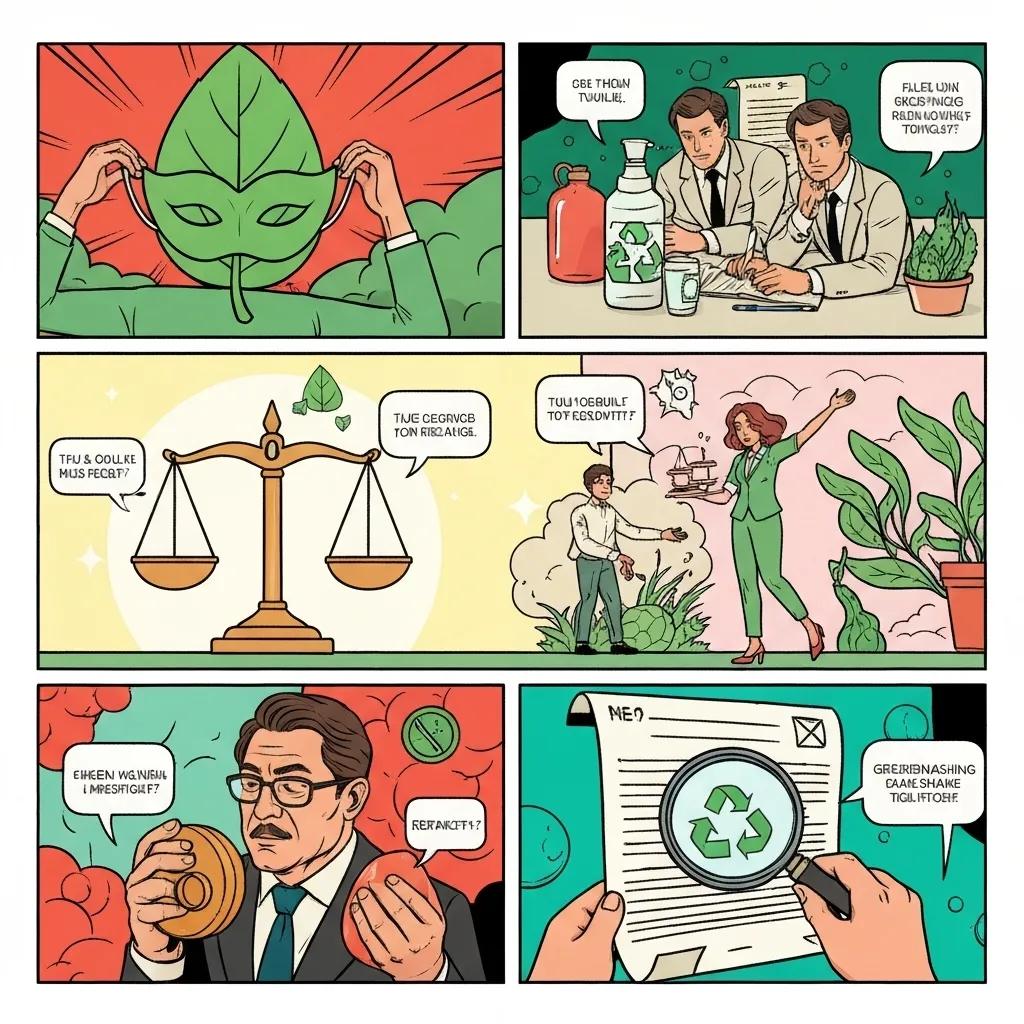
Greenwashing in ESG reporting shows up in a few different ways, each using a slightly different approach to mislead.
| Tactic | What It Is | The Effect |
|---|---|---|
| Greenlighting | Focusing on small green efforts to distract from bigger problems | Creates a false impression of leadership |
| Greenshifting | Blaming consumers for environmental issues instead of taking responsibility | Reduces corporate accountability |
| Greenlabelling | Using eco-labels or certifications that haven’t been verified | Misleads about product standards |
| Greenghushing | Not reporting negative impacts or delays | Prevents stakeholders from asking tough questions |
| Greenrinsing | Repeating vague promises without updates on progress | Damages long-term credibility |
Each tactic uses selective disclosure to shape a story. Knowing these types helps you look closer at report sections and push for solid proof of a company’s sustainability performance.
How Do Companies Misrepresent Environmental Performance in Their Reports?
Companies misrepresent environmental performance by leaving out data, using misleading visuals, and presenting metrics without proper context. They might show percentage reductions without stating the starting point, highlight only successful projects, or use charts that downplay the scale of negative impacts. These distortions reduce transparency and allow ESG deception to thrive under the guise of a polished sustainability story.
How Can You Spot Greenwashing and ESG Deception in Sustainability Reports?
Detecting greenwashing means carefully examining the language used, the scope of the data, and how consistent the information is across different reports. By looking for red flags, recognizing buzzword abuse, and identifying selective reporting, stakeholders can uncover deceptive narratives before they damage trust.
What Are the Warning Signs of a Smokescreen Report?
Key warning signs include bold sustainability headlines that aren’t backed by data, sudden changes in what the report covers, and a mismatch between ESG goals and actual performance numbers. Keep an eye out for these:
- Undefined Benchmarks – Claims like “50% reduction” without stating the starting point.
- Selective Time Frames – Highlighting short-term wins while ignoring long-term trends.
- Unverified Labels – Stating “carbon neutral” status without proof from a third party.
- Too Many Buzzwords – Using terms like “regenerative” or “circular” without explaining what they mean in practice.
- Lack of Context – Leaving out details about environmental trade-offs or impacts within the supply chain.
These red flags signal that you need to dig deeper into the methods and data sources used, which directly leads to understanding how vague language fuels deception.
How Do Vague Language and Buzzwords Lead to Fake Sustainability Claims?
Vague language—like “green growth,” “sustainable innovation,” or “net positive impact”—creates an impression of action without any measurable results. Buzzwords become stand-ins for actual achievements, hiding the lack of tangible progress. For instance, a company might claim to follow a “circular economy” model but provide no details on how much material is reused or how much waste is diverted, leaving stakeholders unable to gauge real progress.
What Role Does Selective Sustainability Reporting Play in ESG Deception?
Selective sustainability reporting involves presenting only the positive metrics while hiding negative or neutral data. This creates a biased picture that emphasizes successes and ignores areas needing improvement. By showing only one side of the story, companies can make investors and customers overly confident without taking full accountability for their overall ESG performance. Recognizing selective reporting techniques helps you understand specific greenwashing tactics.
How to Spot Corporate Greenlighting and Other Greenwashing Tactics
Before you evaluate a report, get familiar with the specific tactics used to twist corporate stories.
| Tactic | How It Works | Why It’s Important |
|---|---|---|
| Corporate Greenlighting | Highlighting small “green” projects to distract from bigger environmental issues | Misleads stakeholders about overall performance |
| Greenshifting | Shifting the focus to consumer choices instead of corporate responsibility | Helps companies avoid direct accountability |
| Greenhushing | Not talking about environmental challenges or setbacks | Prevents critical questions from being asked |
| Greenlabelling | Using unverified eco-labels | Creates false trust in product claims |
By understanding how each tactic works and its impact, you can build a mental framework to assess any sustainability disclosure for honesty and completeness.
What Are the Consequences of Greenwashing and ESG Reporting Deception?
When companies use smokescreen reporting, they risk damaging their reputation, facing legal trouble, and losing stakeholder trust. Understanding these consequences encourages companies to be more transparent and provides a strong reason to make genuine ESG improvements.
How Does Greenwashing Affect Brand Reputation and Stakeholder Trust?
Greenwashing damages a brand‘s integrity by eroding the confidence of investors, customers, and regulators. When stakeholders discover misleading information, they might pull their investments, spread negative word-of-mouth, or criticize the company on social media. Once trust is broken, rebuilding credibility takes a lot of consistent, honest reporting and proven results—much harder than being upfront from the start.
Greenwashing: A Guide for Investors
This report from the CFA Institute explores greenwashing, its effects on investors, and how to identify it. It emphasizes the importance of accurate and transparent ESG reporting for maintaining investor confidence and making sound decisions.
CFA Institute, Greenwashing: A Guide for Investors, 2021
What Are the Legal and Regulatory Risks of Making Unsubstantiated Green Claims?
Regulatory bodies worldwide are strengthening rules to penalize false sustainability claims. Companies could face fines, legal orders, and mandatory disclosures under regulations like the FTC Green Guides or the upcoming EU Green Claims Directive. Failing to comply can lead to lawsuits and enforcement actions that disrupt business operations and financial stability.
How Does Consumer Skepticism Impact Corporate Sustainability Efforts?
With growing consumer skepticism, especially among younger generations, questionable ESG claims can hurt brand loyalty. Customers want proof of impact and will choose companies that show real sustainability commitments. This consumer pressure highlights the strategic advantage of accurate reporting and the risk of losing market share for companies that engage in deceptive practices.
How Can Grammarly’s AI Tools Help Prevent Greenwashing in Sustainability Reports?
Grammarly’s AI writing assistant improves report integrity by making language more precise, catching unclear phrasing, and ensuring a consistent tone throughout disclosures. Using these tools in your ESG reporting process boosts credibility and supports a culture of open communication.
How Does Grammarly Improve Clarity and Accuracy in ESG Disclosures?
Grammarly’s clarity suggestions help identify long, confusing sentences, jargon, and overly complex phrasing that obscure meaning. By recommending simpler wording, the tool ensures that sustainability metrics—like emissions data or resource usage figures—are communicated clearly, allowing stakeholders to understand performance without confusion.
In What Ways Can Grammarly’s Tone Detector Enhance Credibility in Reports?
The Tone Detector flags language that is too promotional or evasive, which can be signs of greenwashing. By suggesting a neutral, factual tone, Grammarly helps writers balance optimism with accountability and maintain stakeholder trust through consistent, honest messaging.
How Does Grammarly Detect Vague or Misleading Language in Corporate Communications?
Using linguistic analysis, Grammarly points out buzzwords and vague terms—such as “virtually zero” or “industry-leading”—that lack specific evidence. These prompts encourage writers to replace unclear claims with concrete data or clear disclaimers, reducing the risk of making unsubstantiated sustainability statements.
How Can Grammarly Business Support Consistent and Transparent Team Reporting?
Grammarly Business allows organizations to create style guides and brand tone profiles that enforce consistent language standards across all teams. Shared templates and real-time collaborative suggestions ensure that everyone contributes with the same commitment to clarity and transparency in their ESG reports.
What Are the Best Practices and Regulatory Requirements for Transparent Sustainability Reporting?

Transparent reporting involves collecting solid data, getting it verified by third parties, and following established frameworks. Understanding regulatory requirements and best practices helps organizations create trustworthy disclosures that can withstand scrutiny from stakeholders and regulators.
Which Global Regulations Address Greenwashing and ESG Fraud?
Key regulations include:
- FTC Green Guides (USA): Offers guidance on environmental marketing claims and penalties for deceptive statements.
- EU Green Claims Directive: Sets standards for proving environmental claims within the European Union.
- Corporate Sustainability Reporting Directive (CSRD): Requires EU companies to report standardized ESG performance metrics, subject to external audits.
These regulations establish a minimum compliance standard and discourage greenwashing through official enforcement actions.
The EU Green Claims Directive
The EU Green Claims Directive outlines the criteria for substantiating environmental claims. Its goal is to combat greenwashing by ensuring that environmental claims are accurate, reliable, and verifiable. This directive will affect how companies in the EU report their sustainability efforts.
European Commission, Proposal for a Directive on Green Claims, 2023
How Does Third-Party Verification Enhance Report Transparency?
Independent audits and certifications—like ISO 14001 for environmental management or assurance statements from reputable accounting firms—add credibility by confirming the accuracy of data and methods. Third-party verification bridges the gap between self-reported numbers and verifiable performance evidence, strengthening stakeholder confidence.
What Are the Recommended Standards for Ethical ESG Reporting? (e.g., GRI, ESRS)
Leading disclosure frameworks include:
- Global Reporting Initiative (GRI): Provides standardized indicators for environmental, social, and governance performance with comprehensive guidelines.
- European Sustainability Reporting Standards (ESRS): Offers sector-specific metrics and narrative requirements for EU companies.
- Sustainability Accounting Standards Board (SASB): Delivers industry-focused standards that connect ESG disclosures to financial relevance.
Following these standards ensures consistency, comparability, and completeness in sustainability reporting.
Global Reporting Initiative (GRI) Standards
The GRI Standards offer a complete framework for sustainability reporting, providing standardized metrics for environmental, social, and governance performance. These standards help ensure consistency, comparability, and thoroughness in sustainability reporting.
Global Reporting Initiative, GRI Standards, 2024
What Future Trends Are Emerging in ESG Reporting and AI Integration?
Advances in AI and natural language processing are enabling automated ESG data analysis, real-time tracking of sustainability indicators, and predictive insights into emerging risks. Companies can use AI-powered dashboards to streamline reporting processes, detect anomalies in disclosures, and stay aligned with evolving regulatory expectations.
What Are Real-World Examples and Case Studies of Smokescreen Sustainability Reports?
Examining high-profile mistakes and successes offers practical lessons on how to avoid greenwashing and promote honest ESG communication.
Which Companies Have Been Caught Engaging in Greenwashing and ESG Deception?
Notable cases include:
- Automotive Manufacturer: Claimed carbon neutrality in ads but didn’t account for supply chain emissions.
- Asset Manager: Marketed sustainable investment funds without checking if portfolio holdings actually met sustainability criteria.
- Fast-Moving Consumer Goods Brand: Emphasized the use of recycled packaging while ignoring ongoing deforestation linked to its sourcing.
Each company exposed faced regulatory investigations, drops in share price, and damage to its reputation.
How Could Grammarly’s Tools Have Prevented These Reporting Failures?
In each of these situations, Grammarly’s AI could have flagged vague terms—like “neutral” or “eco-friendly”—and prompted writers to add specific data or third-party proof. The Tone Detector would have discouraged overly promotional language, and clarity suggestions would have highlighted missing context or undefined benchmarks.
What Lessons Can Be Learned from Transparent and Credible Sustainability Reports?
Transparency relies on using measurable metrics, fully disclosing scope boundaries, and getting independent assurance. Credible reports provide clear starting points, explain how data was collected, and include feedback from stakeholders. Following these best practices builds long-term trust and a resilient brand value.
How Can Stakeholders Use Checklists and Tools to Evaluate Sustainability Reports?
Practical evaluation tools empower investors, employees, and community groups to hold companies accountable and support genuine ESG progress.
What Are the Key Questions to Ask When Reviewing ESG Disclosures?
Stakeholders should ask:
- Are all emission scopes clearly defined and verified by a third party?
- Do reported reductions refer to a clear baseline and methodology?
- Is there proof that stakeholders were involved in setting goals and assessing performance?
- Have third-party certifications or assurance statements been included?
These questions help guide a thorough assessment of the report‘s accuracy and depth.
How Can Interactive Checklists Help Detect Fake Sustainability Claims?
Digital checklists that use AI for language analysis can automatically flag missing data, unclear terms, or inconsistent metrics. By turning evaluation criteria into interactive steps, stakeholders can systematically check each disclosure element against established standards.
How Does Stakeholder Engagement Influence Report Transparency and Accountability?
Active stakeholder engagement—through surveys, public discussions, and advisory groups—ensures that reporting priorities align with the concerns of the community and investors. Involving outside perspectives in goal-setting and review processes fosters accountability, reduces the chance of selective reporting, and strengthens overall credibility.
Corporate transparency is key to real ESG progress, and strong sustainability reporting depends on clear language, verified data, and working together with stakeholders. By understanding smokescreen tactics, recognizing regulatory requirements, and using AI tools for clarity and tone, companies can prevent greenwashing and build lasting trust. Adopting recognized standards, getting third-party verification, and involving stakeholders create a solid foundation for trustworthy disclosures—and Grammarly’s AI suite helps every writer communicate sustainability with precision and integrity.
Frequently Asked Questions
What are the long-term effects of greenwashing on a company’s financial performance?
Greenwashing can seriously harm a company’s long-term financial health. When stakeholders discover deceptive practices, they might pull investments, causing stock prices to drop. Companies may also face legal penalties and increased regulatory scrutiny, leading to expensive compliance efforts. Over time, the loss of brand trust can reduce customer loyalty and market share, ultimately affecting revenue and profits. Companies that focus on transparency and genuine sustainability efforts are more likely to achieve long-term financial stability.
How can consumers protect themselves from greenwashing when making purchasing decisions?
Consumers can protect themselves from greenwashing by doing thorough research before buying. This includes looking for third-party certifications, reading product reviews, and seeking transparency in sustainability claims. Knowing common greenwashing tactics, like vague language and unverified eco-labels, can also help consumers spot misleading marketing. Talking directly with brands and asking for specific data on their sustainability practices can ensure informed choices. By favoring companies that show a real commitment to sustainability, consumers can support ethical practices.
What role do social media and public opinion play in combating greenwashing?
Social media and public opinion are vital in fighting greenwashing by raising awareness and holding companies accountable. Consumers increasingly share their experiences and views online, which can quickly expose misleading claims and practices. Negative publicity can significantly damage the reputation of companies caught greenwashing, pushing them to adopt more transparent methods. Social media platforms also serve as spaces for advocacy, where consumers can rally support for brands that prioritize genuine sustainability efforts, influencing market trends and corporate behavior.
How can companies effectively communicate their genuine sustainability efforts?
Companies can effectively communicate their true sustainability efforts by providing clear, measurable data and transparent reporting. Using recognized frameworks, like the Global Reporting Initiative (GRI), helps standardize disclosures and boosts credibility. Engaging stakeholders through regular updates and feedback channels builds trust and accountability. Companies should also avoid jargon and vague language, opting for straightforward communication that highlights specific achievements and ongoing challenges. By being honest about their sustainability journey, companies can build stronger relationships with stakeholders and improve their reputation.
What are the implications of the EU Green Claims Directive for companies operating in Europe?
The EU Green Claims Directive imposes strict rules on companies operating in Europe regarding the proof of their environmental claims. Companies must provide clear evidence to support their sustainability assertions, which may include third-party verification and detailed reporting. Not complying can lead to significant penalties and reputational harm. This directive aims to stop greenwashing by ensuring consumers receive accurate information, thus promoting fair competition among businesses. Companies that adapt to these rules early can enhance their credibility and consumer trust in the long run.
How can AI tools enhance the accuracy of sustainability reporting?
AI tools can greatly improve the accuracy of sustainability reporting by automating data analysis and spotting inconsistencies in disclosures. These tools can flag vague language, suggest clearer wording, and ensure metrics are presented understandably. By analyzing large amounts of data, AI can also help organizations track their sustainability performance in real-time, allowing for timely adjustments and improvements. Furthermore, AI-driven insights can help align reports with regulatory requirements and industry standards, ultimately promoting greater transparency and accountability in sustainability communications.
Conclusion
Corporate transparency is vital for genuine ESG progress, and effective sustainability reporting relies on clear language, verified data, and collaboration with stakeholders. By understanding smokescreen tactics and recognizing regulatory requirements, organizations can effectively prevent greenwashing and build lasting trust. Embracing recognized standards and engaging stakeholders creates a solid framework for credible disclosures. See how Grammarly’s AI suite can help your team communicate sustainability with precision and integrity today.